
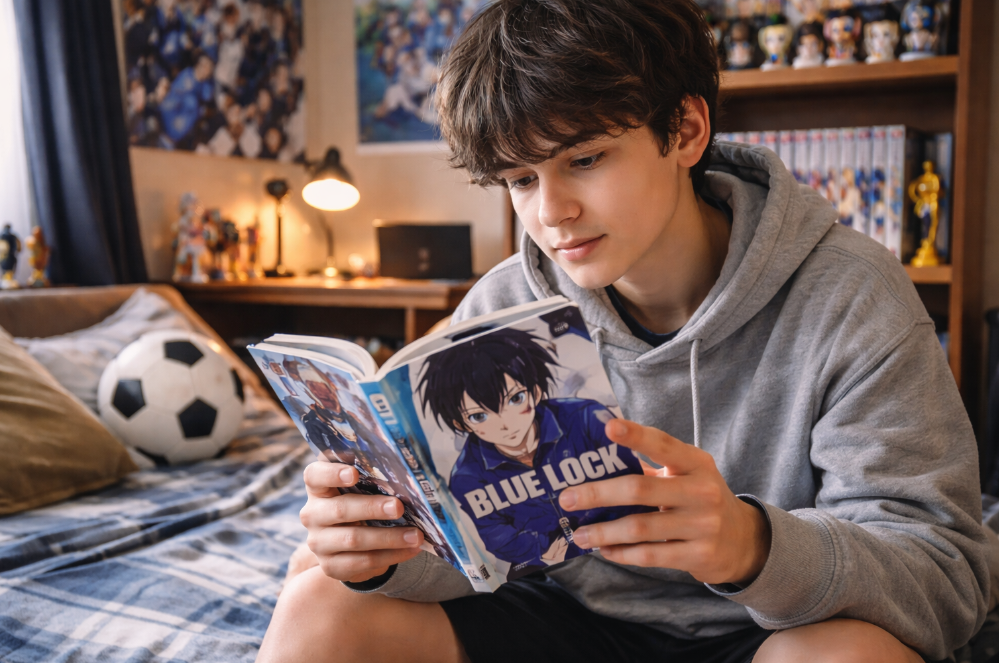
What if becoming the best striker in the world meant eliminating everyone else? That’s the ruthless question at the heart of Blue Lock, a manga series that flips the script on teamwork and glorifies the ego-driven path to greatness. Far from the typical underdog tale, Blue Lock is a psychological rollercoaster disguised as a sports saga. Let’s unravel what really makes this manga so compelling, and why its story resonates beyond the pitch.
What is the core concept behind Blue Lock’s story?
Blue Lock begins in a post-World Cup Japan. After yet another disappointing performance on the global stage, the Japanese Football Union decides to take a radical step. They initiate the “Blue Lock” project: an experimental training camp designed to create the most egoistic striker in the world. The mastermind? Ego Jinpachi, a blunt, intense coach who believes that only those who prioritize their own goals can lead a team to victory. Rather than nurturing team spirit, Ego wants to cultivate individual hunger players who see the goal as their personal destiny. It’s less about passing and more about eliminating the competition. From this vision stems a prison-like training system that brings together 300 of the most promising high school forwards in Japan. Their mission: survive the trials and prove their worth.
This unique premise has fascinated fans globally. It’s not just about football it’s about psychological warfare, identity, ambition, and obsession. If you’ve been collecting anime figures related to high-octane, sports-based stories, Blue Lock is probably already on your shelf. Players are grouped into teams (starting with Team Z, where our protagonist lands), facing off in brutal matches that combine strategy, technical skill, and mental breakdowns. Only one will emerge as the ultimate striker. The rest? Eliminated. Forever barred from representing Japan.
Who is the main character and how does he evolve?
The story follows Yoichi Isagi, a high school forward with a decent passing game but plagued by self-doubt. He starts off as someone who passes the ball at crucial moments, often sacrificing his own chances. But under the extreme conditions of Blue Lock, he undergoes a mental and tactical metamorphosis. Early in the manga, Isagi realizes that his biggest weakness is also his biggest strength: the ability to read the field and make the most impactful decisions. This becomes his signature skill not flashy dribbles or powerful shots, but meta-vision. He begins to see the game differently, like a chess master on a grass battlefield.
As the arc progresses, Isagi faces rivals like Rin Itoshi, Barou, and Nagi Seishiro, each representing a different interpretation of ego and talent. His journey isn’t about being born a genius it’s about earning greatness through clarity and killer instinct. And yes, if you’re looking to expand your collection with merchandise that matches these moments, you can check out specific Blue Lock figures that capture their evolution and energy.
Is Blue Lock inspired by real football or just fiction?
While Blue Lock is fictional, it draws sharp inspiration from real-world football dynamics. Its creator, Muneyuki Kaneshiro, was vocal about Japan’s collective style lacking a “selfish” superstar, like Cristiano Ronaldo or Zlatan Ibrahimović. The manga challenges the idea that unity alone can win championships.
The real-world critique of Japanese football
In international tournaments, Japan is praised for its teamwork but criticized for lacking a game-changer someone who can break the rules to create magic. This criticism sparked the entire concept of Blue Lock. The manga’s intense drills, player rivalries, and focus on striker psychology mirror aspects of elite training camps. You’ll also find that real players have endorsed or commented on Blue Lock’s themes. French striker Kylian Mbappé even appeared in a Blue Lock x Puma collaboration.
How much realism exists in Blue Lock?
Let’s be real no football federation would lock 300 teens in a prison to produce one striker. But the emotional realism is striking. The frustration, ambition, isolation, and bursts of glory mimic what real athletes experience. The exaggerated settings simply serve to intensify the drama.
How does the storyline progress through each arc?
Blue Lock is divided into several key arcs, each reflecting a stage in the evolution of the characters and the increasing pressure of the project. Every arc elevates the stakes. In the First Selection, players fight for survival within their assigned teams. The Second Selection throws them into individual matchups, pushing their limits. By the Third, it’s about strategy and synergy the irony of individualism evolving into high-level cooperation. In the Neo Egoist League, players are drafted into international club-style teams. It’s here that they face real-world-style matches and begin carving their identity beyond Blue Lock. The manga does an excellent job of keeping tension high while ensuring every character has a unique trajectory.
Why has Blue Lock become such a popular manga?
The popularity of Blue Lock lies in its blend of sports, psychology, and philosophy. Unlike traditional soccer manga like Captain Tsubasa, Blue Lock isn’t about friendship. It’s about outgrowing others. That simple yet brutal narrative flips the genre on its head. It resonates especially with modern readers who connect with ambition, self-worth, and competitive pressure. Whether you’re a student, athlete, or creator, the core message is universal: You are not enough until you fight to be. That emotional edge, paired with dramatic artwork and high-stakes moments, creates a gripping experience. From TikTok edits to streaming anime episodes, the Blue Lock universe has expanded rapidly. It’s no longer just a manga it’s a mindset.
Final thoughts on the story behind Blue Lock
Blue Lock isn’t just a tale about football it’s a mirror held up to ambition. Through its brutal structure and explosive characters, it reveals how greatness requires sacrifice, clarity, and confidence. Whether you’re new to manga or a seasoned fan, diving into Blue Lock offers more than entertainment it’s a rush of competitive fire. So, who’s your striker ego twin? Drop your thoughts and let the game begin.
