
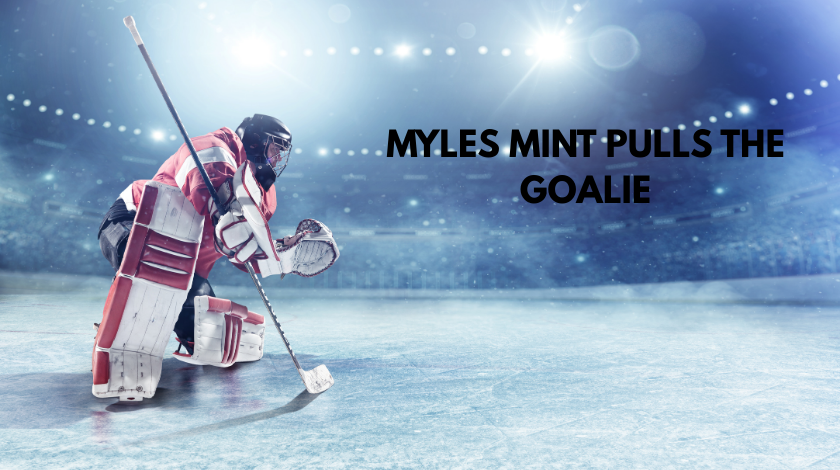
If you’ve ever watched a close hockey game, you’ve probably heard the phrase “pull the goalie.” It always seems to happen at the most intense moment, and it can completely change the game. Today, we’re talking about Myles Mint and the art of pulling the goalie what it means, why coaches do it, and why it’s such a heart-stopping moment for fans.
I’ve been following hockey since I was a kid, and I still remember the first time I saw a goalie leave the net. I was confused at first—why would you leave your goal completely unprotected? But within seconds, the whole arena was on its feet, and I understood: this is the moment when everything is on the line.
Let’s break it down so you can follow the drama like a pro next time you watch a game.
What Does “Pulls the Goalie” Mean?
Pulling the goalie is exactly what it sounds like. The coach signals for the goalie to skate off the ice and brings in another skater instead. Suddenly, the team has six players skating against the other team’s five. It’s a risky but powerful move designed to score a last-minute goal.
Think of it like going all-in during a poker game. You’re risking everything, but if it works, you just might turn the whole thing around.
Why Fans Love It
Fans live for the moment when the goalie heads to the bench. Here’s why:
-
The tension skyrockets. Everyone knows one mistake could mean an empty-net goal for the other team.
-
It feels dramatic. It’s the coach saying, “We’re not going down without a fight.”
-
It often works. Believe it or not, teams score often enough to make this strategy worth trying.
-
It’s unpredictable. The next 60 seconds could make or break the game.
Personally, I love when this happens. Even if my team isn’t the one doing it, it’s impossible to look away. You can almost feel the energy shift in the arena.
Timing Is Everything
Pulling the goalie too early or too late can decide the game. Most coaches do it with around 60 to 90 seconds left if they’re down by one goal. That gives the team enough time to get set up offensively without leaving too much time for the other team to score on an empty net.
I remember watching a game where the coach pulled the goalie with three minutes left. It felt way too early—and sure enough, the other team scored almost immediately. Timing really is the difference between being bold and being reckless.
What Coaches Think About Before Pulling the Goalie
This isn’t a decision a coach makes on a whim. They’re thinking about:
-
Puck possession: Do we have control of the puck? If not, wait.
-
Faceoff location: Is the next faceoff in the offensive zone? Perfect time to pull.
-
Team confidence: Are the players ready to handle the pressure?
I’ve spoken to local coaches who say they even practice this scenario in training so players know exactly where to go and what to do when the net is empty.
The Psychology of the Move
Pulling the goalie isn’t just about X’s and O’s. It’s psychological warfare. It tells your players, “I trust you to tie this game.” It also puts pressure on the other team, who suddenly have to defend against an extra attacker.
One of my favorite moments came during a playoff game a few years ago. My team was down 2–1, goalie pulled, 30 seconds left. The arena was so loud I could feel the vibrations in my chest. When the tying goal went in, the place erupted. That single decision by the coach gave the team—and the fans—a second life.
The Risks When It Goes Wrong
Of course, sometimes it backfires. Empty-net goals are frustrating but common. Here are the biggest risks:
-
Easy goals for the opponent if they gain control of the puck.
-
Momentum killer for the team if they give up that empty-netter.
-
Fan criticism (“Why did he pull the goalie so early?”).
I’ve been in the stands for games where the other team scored on the empty net twice in a row. The crowd went from hopeful to silent in seconds. That’s the gamble.
Famous Moments When It Worked
Pulling the goalie has created some unforgettable hockey moments. Here are a few worth knowing:
-
2013 Stanley Cup Final, Game 6: The Chicago Blackhawks scored two goals in 17 seconds after pulling their goalie, clinching the Cup.
-
2015 World Juniors: Canada tied the game in the dying seconds after pulling the goalie, leading to an overtime win.
-
Countless local games: Even in amateur hockey, there’s nothing like the adrenaline of a last-minute 6-on-5 goal.
These moments are why coaches keep using the strategy, even with the risk.
My Take on Pulling the Goalie
If I were a coach, I’d probably be a bit conservative—I’d wait until the last minute or so unless my team was buzzing offensively. But if you’re down by two goals, you almost have to pull earlier. Some NHL coaches have even started doing it with three minutes left when trailing by two, and the math actually supports it.
For me, the most important thing is making sure the players are ready and have a set plan. It’s not just about having an extra skater—it’s about using that extra skater effectively.
Pulling the Goalie at Different Levels of Play
At the NHL level, this is practically a science. At youth or amateur levels, it’s a bit more chaotic. I’ve seen kids’ games where the goalie looked completely confused about when to leave the net. It can be hilarious but also a great learning moment.
In beer league games, pulling the goalie is often just for fun. People love the drama—even if it usually ends with the puck slowly sliding into the empty net while everyone laughs.
Tips to Think Like a Coach
If you want to sound smart next time you watch a game, keep these tips in mind:
-
Watch puck control. Teams usually wait until they have clean possession.
-
Notice where the faceoff is. Offensive-zone faceoffs are prime time for pulling the goalie.
-
Pay attention to the score and clock. Coaches won’t risk it if they’re tied or leading.
-
Look for the signal. Once the goalie starts skating toward the bench, get ready for the fireworks.
Conclusion: Why It’s One of Hockey’s Best Moments
Pulling the goalie is one of the most exciting moments in sports. It’s a mix of strategy, courage, and pure drama. When it works, it creates some of the most memorable goals you’ll ever see. When it doesn’t, well, at least you went down swinging.
For me, watching Myles Mint pull the goalie reminds me why I love hockey. It’s about taking risks, believing in your team, and giving yourself a shot—literally—at tying the game. Next time you see it happen, pay attention. That’s when the magic often begins.
